Breaker Size Calculator: How to Calculate Breaker Size Correctly Every Time
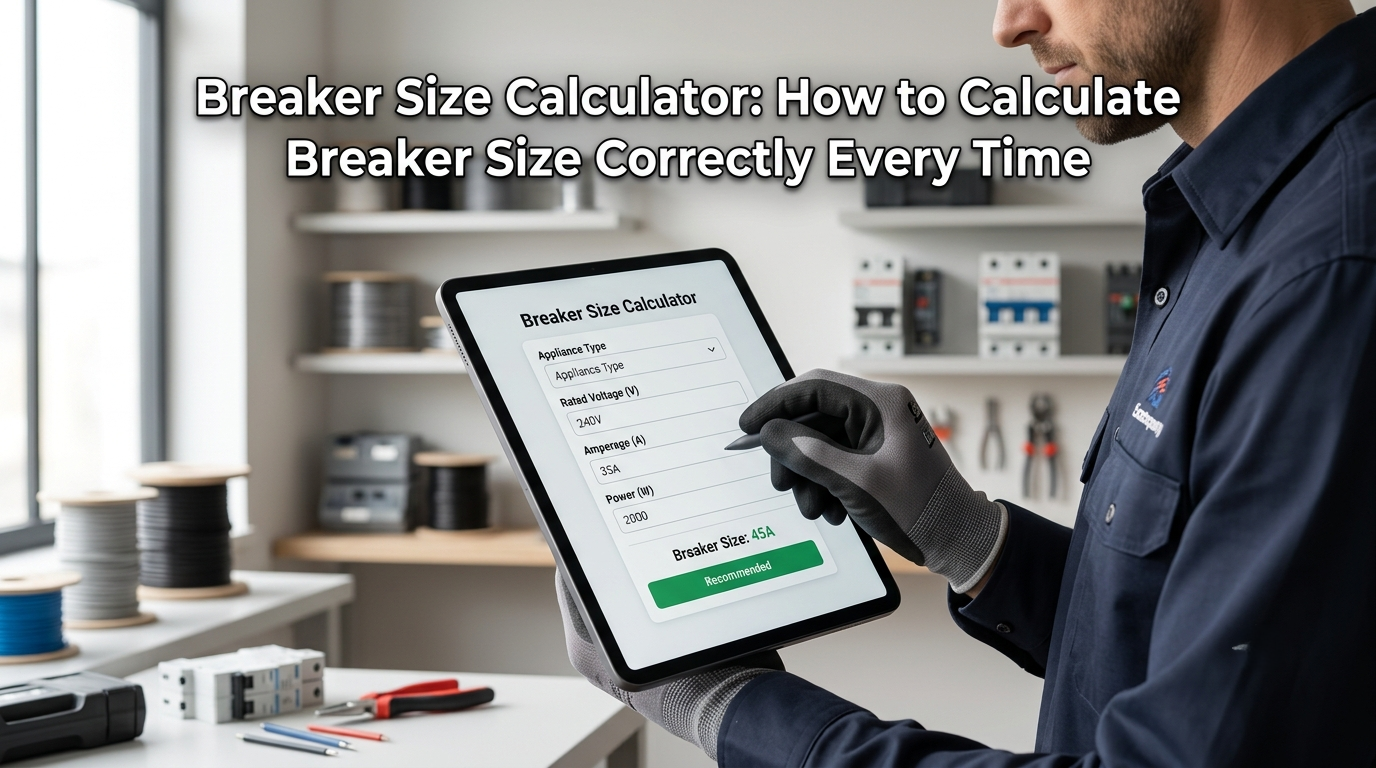
Selecting the right breaker size is one of the most critical decisions in any electrical installation — and getting it wrong has real consequences. An undersized circuit breaker trips constantly and disrupts power at the worst moments. An oversized breaker fails to protect wiring properly, creating a fire risk that may not show itself until years later. A breaker size calculator removes the guesswork from this decision by applying the correct formula to your specific load, voltage, and National Electrical Code (NEC) requirements.
Whether you are sizing a breaker for a residential kitchen circuit, an air conditioning unit, an electric vehicle charger, Whether you are working with a subpanel that supplies a workshop or a similar setup, this guide explains the complete process step by step: what a breaker size calculator does, how to calculate breaker size step by step using the NEC formula, a practical reference table for the most common appliances and circuits, and expert guidance on the safety rules that govern every correctly sized breaker installation.
Table of contents
- What Is a Breaker Size Calculator?
- How to Calculate Breaker Size: The Formula Explained
- Breaker Size Calculator Reference: Common Appliances and Circuits
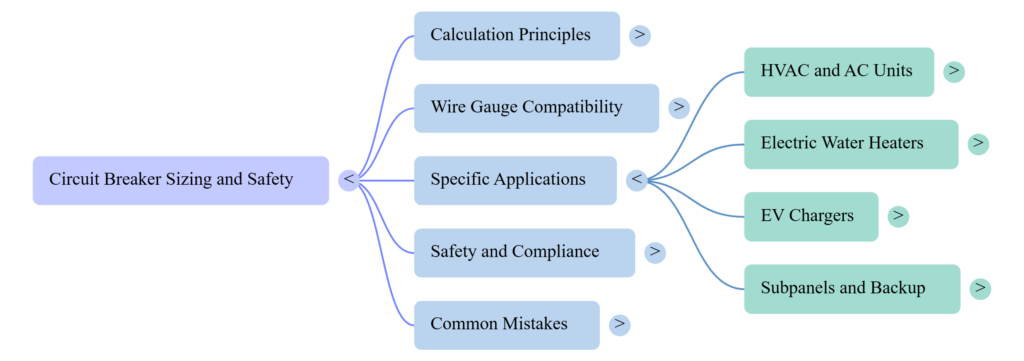
- How to Calculate Breaker Size for Specific Applications
- Pros and Cons of Using a Breaker Size Calculator
- Which Breaker Size Is Best: Using the Calculator to Make the Right Call
- Common Breaker Sizing Mistakes to Avoid
- Conclusion
What Is a Breaker Size Calculator?
A breaker size calculator is a tool — either digital or applied manually using a formula — that determines the correct amperage rating for a circuit breaker based on the electrical load the circuit is expected to carry. It takes three key inputs: the total wattage of the connected load, the supply voltage (typically 120 V or 240 V in North American systems), and the applicable NEC safety factor, and it produces a recommended breaker rating in amps.
Circuit breakers are overcurrent protection devices. When current flowing through a circuit exceeds the breaker’s rated amperage, the breaker trips and interrupts power to prevent the wiring from overheating. The breaker size must be matched carefully to both expected load and the current-carrying capacity of wire (conductor) it protects. A 20-amp breaker must be paired with wire rated for at least 20 amps — typically 12 AWG copper — and must not be loaded beyond 80% of its rating under continuous load conditions, per NEC 210.19 and 210.20.
Using a breaker size calculator ensures that the amperage rating you select aligns with both the actual electrical demand of your circuit and safety margins required by the National Electrical Code. For battery backup system installations — where circuits must be sized to handle both the inverter’s rated output and the connected loads simultaneously — an accurate breaker size calculation is especially important.
How to Calculate Breaker Size: The Formula Explained
The core formula behind every breaker size calculator is straightforward. Understanding it allows you to verify any calculator’s output and apply the calculation manually when needed.
Before selecting a breaker size, estimate the total appliance load using our Home Appliance Energy Calculator.
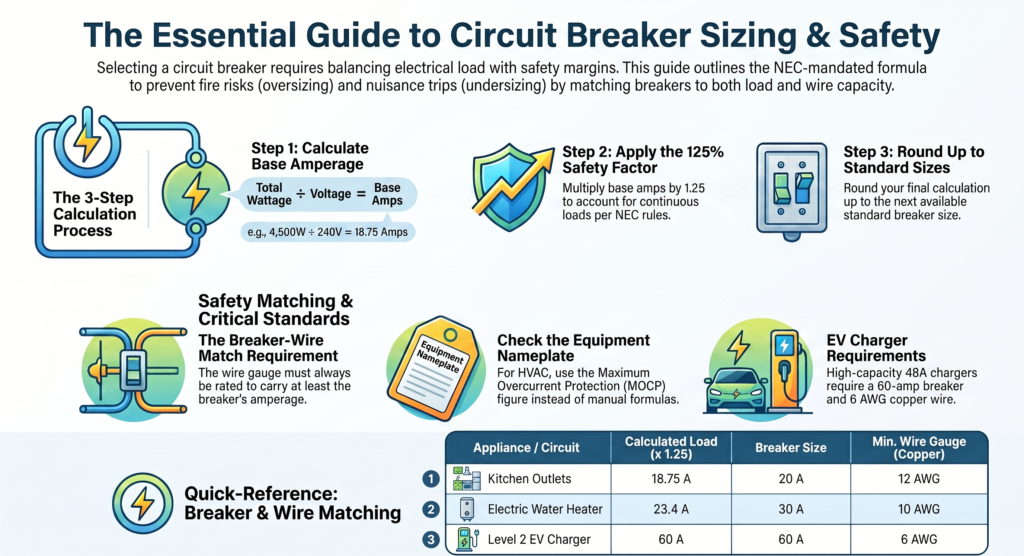
Step 1 — Calculate the Circuit’s Amperage Draw
Start by converting wattage to amperage using Ohm’s Law:
Amps = Watts ÷ Volts
For example: A 4,500-watt electric water heater on a 240-volt circuit draws 4,500 ÷ 240 = 18.75 amps.
For a 120-volt circuit — a standard kitchen outlet supplying 1,800-watt appliance — the calculation is 1,800 ÷ 120 = 15 amps.
Step 2 — Apply the NEC 80% Continuous Load Rule
According to the National Electrical Code, circuit breakers serving continuous loads that operate for three hours or longer should carry no more than 80% of their rated capacity. This means the calculated amperage must be divided by 0.80 — or equivalently, multiplied by 1.25 — to determine the minimum breaker rating.
Continuing the water heater example: 18.75 amps ÷ 0.80 = 23.4 amps. Since breakers are available in standard sizes, you round up to next available standard size — in this case, 30-amp breaker.
The complete breaker size calculator formula is therefore:
Breaker Size = (Watts ÷ Volts) × 1.25 → Round up to nearest standard breaker size
Step 3 — Verify Wire Size Compatibility
Once you have calculated the breaker size, verify that the wire gauge being used on the circuit is rated to carry at least that amperage. The NEC specifies minimum wire sizes for each amperage level: 15-amp circuits require minimum 14 AWG copper wire; 20-amp circuits require minimum 12 AWG copper; 30-amp circuits require minimum 10 AWG copper; 40–50-amp circuits require minimum 8 AWG copper; 60-amp circuits require minimum 6 AWG copper. A breaker size calculator that also incorporates wire gauge selection is a complete electrical load calculation tool.
Breaker Size Calculator Reference: Common Appliances and Circuits
Use this table as a quick-reference guide when applying the breaker size calculator formula to the most frequently encountered residential and light commercial circuits:
| Appliance / Circuit | Typical Wattage | Voltage | Calculated Amps | Recommended Breaker Size |
| General lighting (bedroom) | 600–1,200 W | 120 V | 5–10 A | 15 A |
| Kitchen outlets (small appliances) | 1,500–1,800 W | 120 V | 12.5–15 A | 20 A |
| Central air conditioner (3-ton) | 3,500 W | 240 V | 14.6 A → ×1.25 = 18.25 A | 25 A |
| Electric water heater (40-gal) | 4,500 W | 240 V | 18.75 A → ×1.25 = 23.4 A | 30 A |
| Electric clothes dryer | 5,000 W | 240 V | 20.8 A → ×1.25 = 26 A | 30 A |
| EV charger (Level 2, 48A unit) | 11,520 W | 240 V | 48 A → ×1.25 = 60 A | 60 A |
| Workshop subpanel | Varies (load calc) | 240 V | Per total load | 60–100 A |
| Main residential panel (typical) | Up to 24,000 W | 240 V | 100 A | 100–200 A |
How to Calculate Breaker Size for Specific Applications
Breaker Size for Air Conditioners and HVAC Systems
Air conditioning units are among the most important applications for a breaker size calculator because they involve motor loads that draw higher current at startup than during normal operation. The nameplate on the AC unit specifies the Minimum Circuit Ampacity (MCA) and the Maximum Overcurrent Protection (MOCP) — both of which are legally required figures under NEC Article 440. Always use the MOCP figure from the nameplate as your upper limit when selecting the breaker. Do not attempt to apply the standard watts-to-amps formula alone for HVAC equipment; the motor startup surge current must be factored in, and the nameplate data accounts for this.
After calculating circuit loads, you can estimate electricity costs with our Electricity Bill Calculator.
For a typical 3-ton central air conditioner drawing 3,500 watts on a 240-volt circuit, the calculated load is 14.6 amps. Applying the 1.25 continuous load multiplier produces 18.25 amps — which rounds up to a 25-amp breaker. However, if the unit’s nameplate specifies a higher MOCP (such as 30 amps), use the nameplate figure.
Breaker Size for Electric Water Heaters
Electric water heaters are continuous loads by definition — they cycle frequently and maintain temperature over extended periods. The NEC 80% rule applies strictly. A standard 4,500-watt, 240-volt residential water heater requires: 4,500 ÷ 240 = 18.75 amps × 1.25 = 23.4 amps → 30-amp breaker, paired with 10 AWG copper wire. This is the industry-standard sizing for residential water heaters in the United States, and any accurate breaker size calculator will confirm this result.
Breaker Size for EV Chargers
Level 2 electric vehicle chargers represent one of the most significant new electrical loads in residential panels. A 48-amp EV charger (the most common high-capacity residential unit) is technically a continuous load and must be protected by a breaker sized at 48 × 1.25 = 60 amps, wired with 6 AWG copper conductor. Some 32-amp units are available that require a 40-amp breaker on 8 AWG wire. Always verify the charger manufacturer’s specifications against your local AHJ (Authority Having Jurisdiction) requirements before final installation.
Breaker Size for Subpanels
Sizing a breaker for a subpanel requires calculating the total anticipated load of all circuits the subpanel will serve, adding a reasonable demand factor, applying the 1.25 multiplier for continuous loads, and then selecting a feeder breaker at the main panel that adequately covers that total. A workshop subpanel supplying four 20-amp circuits (maximum draw 80 amps) would typically be fed from a 100-amp breaker at the main panel, using 3 AWG copper or 1 AWG aluminum feeder conductors. A breaker size calculator that handles subpanel load aggregation is a valuable tool for any panel upgrade or addition project.
Breaker Size for Generators and Battery Backup Systems
When integrating a generator or battery backup system into an electrical panel, size the transfer switch and its associated breakers to handle the generator or inverter’s full rated output. A 7,500-watt generator on a 240-volt output produces 31.25 amps — which, with the 1.25 continuous load factor applied, requires a 40-amp breaker minimum. For battery backup inverters, the breaker on the output circuit must match the inverter’s maximum continuous output current rating, not simply the connected load — since the inverter may be capable of supplying more current than the individual load currently draws.
Understanding wattage calculations is essential when sizing breakers. Read our How to Find Watts guide to learn the formulas.
Pros and Cons of Using a Breaker Size Calculator
Why Every Electrician and Homeowner Should Use One
- Eliminates guesswork from breaker selection — the formula produces a specific, defensible amperage recommendation every time
- Prevents both under-sizing (nuisance tripping) and over-sizing (wiring fire risk) in a single calculation
- Ensures NEC compliance by automatically applying the 80% continuous load rule to every calculation
- Speeds up panel upgrades, subpanel additions, and new circuit installations by providing immediate sizing guidance
- Reduces the risk of failed electrical inspections caused by improperly sized overcurrent protection devices
- Paired with a wire gauge reference, a breaker size calculator gives you a complete branch circuit specification in under two minutes
Limitations to Understand Before Relying Solely on a Calculator
- A breaker size calculator applies the NEC standard formula — it does not account for local code amendments that may require different sizing in specific jurisdictions
- Motor loads (HVAC, pumps, compressors) require nameplate data rather than simple wattage calculation due to startup surge current — always cross-reference the MOCP on the equipment nameplate
- Complex load aggregation for whole-home panels or subpanels requires a full NEC Article 220 load calculation, which goes beyond what a basic breaker size calculator provides
- A calculator produces a code-minimum recommendation — experienced electricians often upsize circuits by one standard breaker size for future load expansion
Which Breaker Size Is Best: Using the Calculator to Make the Right Call
When the Standard Formula Is Sufficient
For the vast majority of residential circuit applications — kitchen outlets, bedroom lighting, bathroom circuits, laundry circuits, and simple appliance circuits — the standard breaker size calculator formula (Watts ÷ Volts × 1.25, rounded up to the next standard size) produces the correct result directly. These are straightforward resistive or mixed loads that do not involve motor startup surge currents or complex demand factors. The formula is reliable, the NEC is clear, and the wire size matching is straightforward.
When You Need More Than a Basic Calculator
For HVAC systems, motors, EV chargers, generator interconnections, and battery backup installations, the basic formula is a starting point rather than a complete answer. These applications require cross-referencing the equipment nameplate, considering NEC Article 440 (air conditioning and refrigeration), NEC Article 430 (motors), and potentially local utility interconnection requirements for battery storage systems. In these cases, use a breaker size calculator to establish the baseline and then verify against manufacturer specifications and your local authority having jurisdiction.
Selecting the correct breaker also requires proper wiring. Read our Types of Wire guide for more details.
When to Call a Licensed Electrician
Any breaker sizing decision that involves the main service entrance, a new subpanel, a generator or battery backup system interconnection, or any commercial or industrial application should be reviewed by a licensed electrician before installation. The breaker size calculator gives you the knowledge to understand the work and ask the right questions — but panel work that requires a permit always requires a qualified professional to pull and execute that permit safely and legally.
Common Breaker Sizing Mistakes to Avoid
- Using the wattage of a single appliance rather than the total load of the entire circuit — always calculate the sum of all connected loads, not just the largest one
- Forgetting to apply the 1.25 multiplier for continuous loads — this is the single most common breaker sizing error among DIY installers
- Selecting a breaker based on available panel space rather than actual load calculation — always calculate first, then confirm whether your panel can accommodate the required breaker
- Mismatching wire gauge to breaker size — a 30-amp breaker on 14 AWG wire is a fire hazard; always verify wire size compatibility as part of every breaker size calculation
- Ignoring the MOCP figure on equipment nameplates — for HVAC, motors, and large appliances, the nameplate MOCP supersedes the calculated value
Conclusion
A breaker size calculator is one of the most practical and important tools in any electrical planning process. By applying the simple formula — Watts ÷ Volts × 1.25, rounded up to the next standard breaker size — and cross-referencing the result against wire gauge requirements and equipment nameplate data, you can determine the correct breaker size for virtually any residential or light commercial circuit with confidence and precision.
The NEC 80% continuous load rule exists for a reason: electrical systems are built with safety margins because real-world loads are not perfectly steady, wiring heats during sustained current draw, and the consequences of an overloaded circuit that a breaker fails to interrupt range from nuisance damage to serious fire risk. A breaker size calculator makes compliance with this safety margin automatic rather than an afterthought.
Explore our Smart Home guides for electrical calculations, appliance energy usage, and home efficiency tips.
Whether you are installing a new circuit, upgrading a panel, planning a battery backup system, or adding an EV charger to your home, start with the calculation, verify the wire size, cross-reference the equipment nameplate, and consult a licensed electrician for any work that requires a permit. The breaker size calculator is your foundation — but sound judgment and professional oversight are what complete every safe electrical installation.
Frequently Asked Questions
1. What is the basic formula for a breaker size calculator?
The standard formula is: Breaker Size = (Watts ÷ Volts) × 1.25, rounded up to the next available standard breaker size. The 1.25 multiplier applies the NEC 80% continuous load rule, which requires that continuous loads (operating three hours or more) not exceed 80% of the circuit breaker’s rated amperage. For example, a 2,400-watt, 120-volt circuit calculates as (2,400 ÷ 120) × 1.25 = 25 amps — rounded to a 25-amp or 30-amp breaker depending on the nearest available standard size.
2. Can I use a larger breaker than the calculation requires?
In most cases, no — not without also upgrading the wire gauge. A circuit breaker protects the wire, not the appliance. If you install a 30-amp breaker on a circuit wired with 14 AWG wire (rated for 15 amps), the breaker will not trip until 30 amps flow through wire that can only safely carry 15 amps — causing the wire to overheat and potentially ignite. The breaker size and wire gauge must always be matched. The only exception is certain motor circuits where the NEC explicitly permits a larger overcurrent protection device to accommodate startup surge current, always with the wire sized appropriately.
3. What wire size should I pair with each breaker size?
NEC minimum wire sizes for copper conductors: 15-amp breaker requires 14 AWG; 20-amp breaker requires 12 AWG; 30-amp breaker requires 10 AWG; 40–50-amp breaker requires 8 AWG; 60-amp breaker requires 6 AWG; 100-amp breaker requires 2 AWG or 3 AWG depending on installation method. Always confirm local code requirements, as some jurisdictions require upsizing beyond NEC minimums.
4. How does a breaker size calculator apply to battery backup systems?
For battery backup and generator installations, size the breaker on the inverter or generator output circuit based on the inverter’s or generator’s maximum continuous output current, not just the currently connected load. A 5,000-watt, 240-volt inverter produces up to 20.8 amps continuous, which with the 1.25 multiplier requires a 26-amp minimum breaker — rounded up to a 30-amp breaker.
5. Is a breaker size calculator accurate enough for commercial electrical work?
A standard breaker size calculator applies NEC residential and light commercial formulas accurately for branch circuit sizing. For commercial applications—especially those involving three-phase power, large motor loads, demand factor calculations under NEC Article 220, or special occupancy requirements—a licensed electrical engineer must prepare a full engineered load calculation. The breaker size calculator is an excellent tool for understanding the principles and checking individual circuit calculations, but it does not replace a complete engineered electrical design for commercial or industrial facilities.